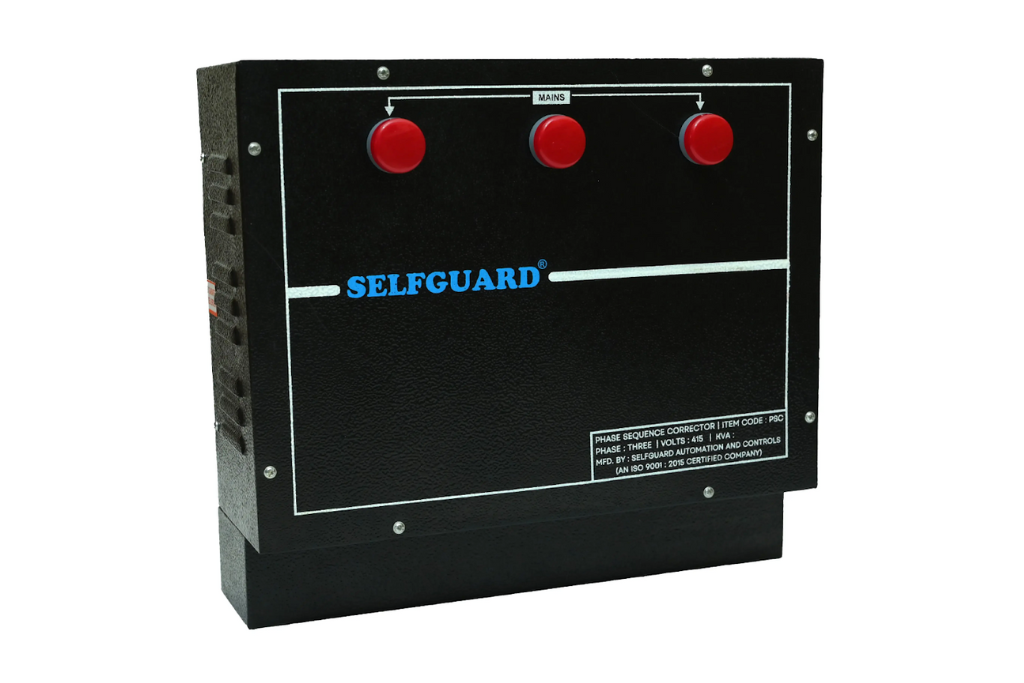
Three-phase power is used extensively in electrical systems that power commercial and industrial machinery. Most heavy equipment, including elevators, UPS systems, motors, pumps, and air conditioners, rely on this type of supply because it provides consistent and efficient power. However, for these systems to function properly, the phase sequence of the electrical supply must be right. If the phase sequence is incorrect, the equipment may malfunction, operate in a dangerous manner, or even become damaged.
What Is Phase Sequence?
A three-phase supply is made up of three alternating currents, typically referred to as R (Red), Y (Yellow), and B (Blue), each displaced by 120 degrees. The phase sequence specifies the order in which the phase voltages attain their greatest values. To ensure proper operation of most electrical equipment, the correct phase order is R → Y → B.
However, this sequence can be altered owing to installation problems, power line maintenance, or electrical supply interruptions. When this occurs, the phases arrive in the wrong order, resulting in phase reversal or incorrect phase sequence. That is where the significance of detecting and correcting phase sequence comes in.
Why Phase Sequence Matters for Equipment
Every three-phase device is designed to expect power in a particular order. When the phase sequence is incorrect:
- Motors may run in the wrong direction: Three-phase motors rely on phase order for direction of rotation. An incorrect sequence can cause the motor to spin backward, potentially harming the machinery it drives.
- Equipment may malfunction or fail: Devices such as lifts, pumps, and air conditioners depend on precise electrical timing. Wrong phase order can disrupt their operations, leading to poor performance or shutdowns.
- Production and safety issues can arise: In industrial environments, phase errors can lead to unplanned downtime, delays, and even unsafe working conditions if critical equipment doesn’t behave as expected.
Because of these risks, ensuring the correct phase sequence is essential for reliable and safe equipment operation.
What Is a Phase Sequence Corrector?
To avoid problems caused by incorrect phase sequencing, devices known as Phase Sequence Correctors (PSCs) are utilised. A Phase Sequence Corrector is designed to automatically detect and correct any wrong phase order, guaranteeing that equipment always receives power in the proper R-Y-B sequence, regardless of how the phases enter the input supply. This makes it an essential tool for three-phase systems.
Selfguard's Automatic Phase Sequence Corrector is a microcontroller-based device that serves this crucial function. It monitors the incoming supply and ensures that the three phases are sequenced correctly before transferring electricity to the connected load.
Key Benefits of Keeping Phase Sequence Correct
1. Protects Equipment from Damage
When the phase order is incorrect, equipment components may encounter aberrant stresses or operate in hazardous situations. A PSC saves money on repairs and replacements by automatically adjusting the phase sequence.
2. Improves Operational Reliability
When machines, such as lifts and motors, are programmed correctly, they perform better. Businesses that install an automatic PSC experience fewer errors, less unscheduled downtime, and more efficient operations overall.
3. Prevents Voltage Imbalance Issues
Selfguard's PSC units also defend against unbalanced voltage, another common electrical issue that can impair the performance and longevity of three-phase equipment. Additionally, they include a single phase preventer to protect machinery from phase loss conditions.
Typical Applications of Phase Sequence Correctors
Selfguard’s Automatic Phase Sequence Corrector is suitable for use with various types of three-phase equipment, such as:
- Lifts and elevators
- Uninterruptible Power Supplies (UPS)
- Air conditioning systems
- Motors and pumps
- Industrial machinery
These devices benefit greatly from consistent and correct phase sequencing — and a PSC ensures that.
Choosing the Right Phase Sequence Corrector
Selfguard PSCs are available in multiple ratings — from 15 KVA to 82.5 KVA — and in compact sizes suitable for different applications. Choosing the right capacity helps ensure that your equipment receives reliable and correct power without interruption.
Conclusion
Understanding phase sequence and its impact on three-phase equipment is critical for any facility that operates under high electrical loads. An improper phase sequence can cause reverse motor rotation, equipment failure, and safety hazards. Installing an Automatic Phase Sequence Corrector, such as those offered by Selfguard, ensures that your systems receive correct, steady, and safe power, thereby improving reliability, protecting machinery, and increasing operating efficiency.