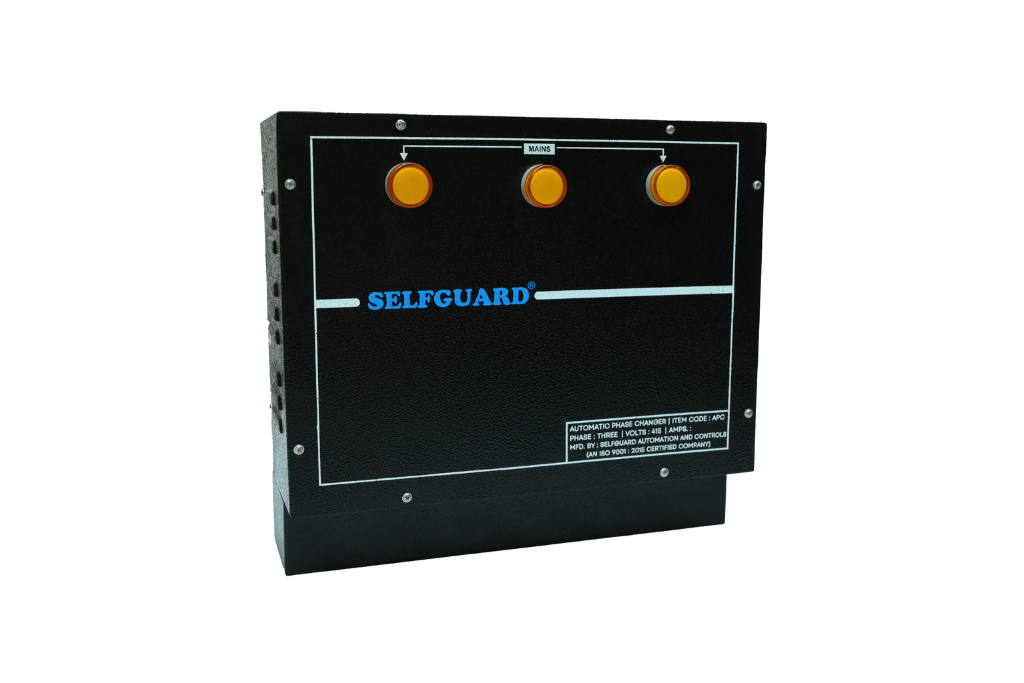
In systems where a three-phase power supply is used with single-phase loads, phase failure can interrupt power supply. An Automatic Phase Changer is designed to ensure continuous operation by automatically managing the available phases.
Understanding Phase Failure
In a three-phase system, failure of one or more phases can interrupt the functioning of connected single-phase loads, even if other phases are available. This creates the need for a device that can automatically respond to such situations.
How Automatic Phase Changers Work
An Automatic Phase Changer is connected only to a three-phase mains supply. Its function is to ensure that single-phase loads continue to receive power even if one or two phases fail. When a phase fails, the device automatically shifts the connected load to an available phase.If the failed phase is restored, the device does not switch back immediately—it uses an inbuilt delay timer before returning the load to the original phase. This delay helps ensure smooth switching and protects connected equipment.
Key Features
- Automatic shifting of the load during phase failure
- Works even if one or two phases fail
- Inbuilt delay timer for safe switching
- Microcontroller-based design
- Available in 63Amps., 100Amps., 125Amps., 150Amps., and 200Amps.
- Selection of the model depends on the total electrical load
Applications
Automatic Phase Changers are used where single-phase loads are connected to a three-phase supply. Typical applications include:
- Lights
- Fans
- Air conditioners
- Small motors
Benefits
- Maintains a continuous power supply to connected loads
- Eliminates the need for manual phase switching
- Ensures smooth transition between phases
Conclusion
Automatic Phase Changer helps maintain continuous operation in three-phase systems by automatically shifting loads to available phases and using a delay timer for safe switching. This makes them suitable for applications where an uninterrupted power supply is required.